Kintsugi・金継ぎ
Urushi・漆・Japanese Lacquer
Projects
The more I learn about Urushi—Japanese lacquer—more I am fascinated by the material’s rich history. I was mezmerized to learn that urushi has been used as a form of adhesive dating all the way back to Jōmon Period, between c. 14,000 and 300 BC. It is wondrous to learn about different uses of urushi that has developed over the course of years and those that have become deeply synonymous with traditional Japanese crafts.
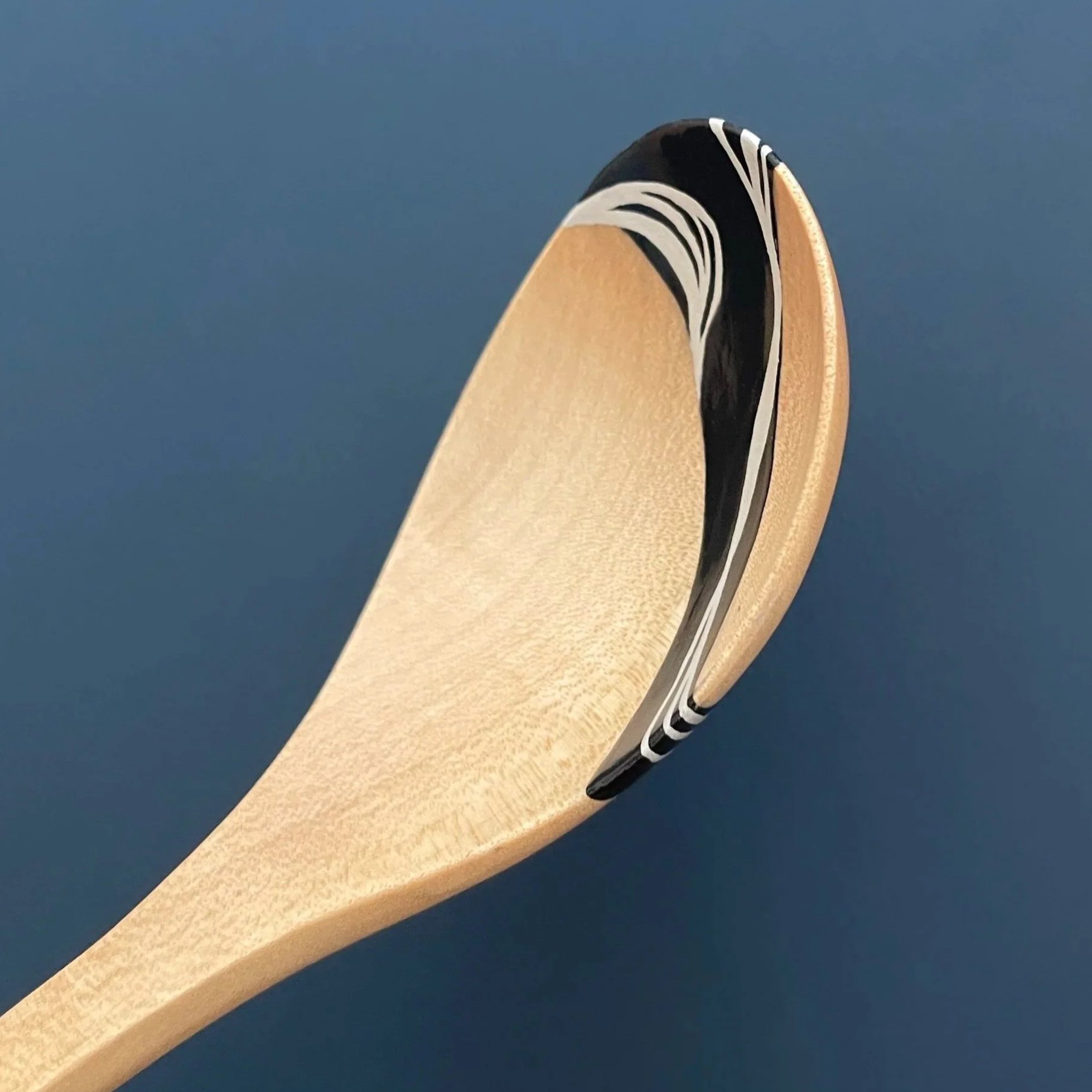
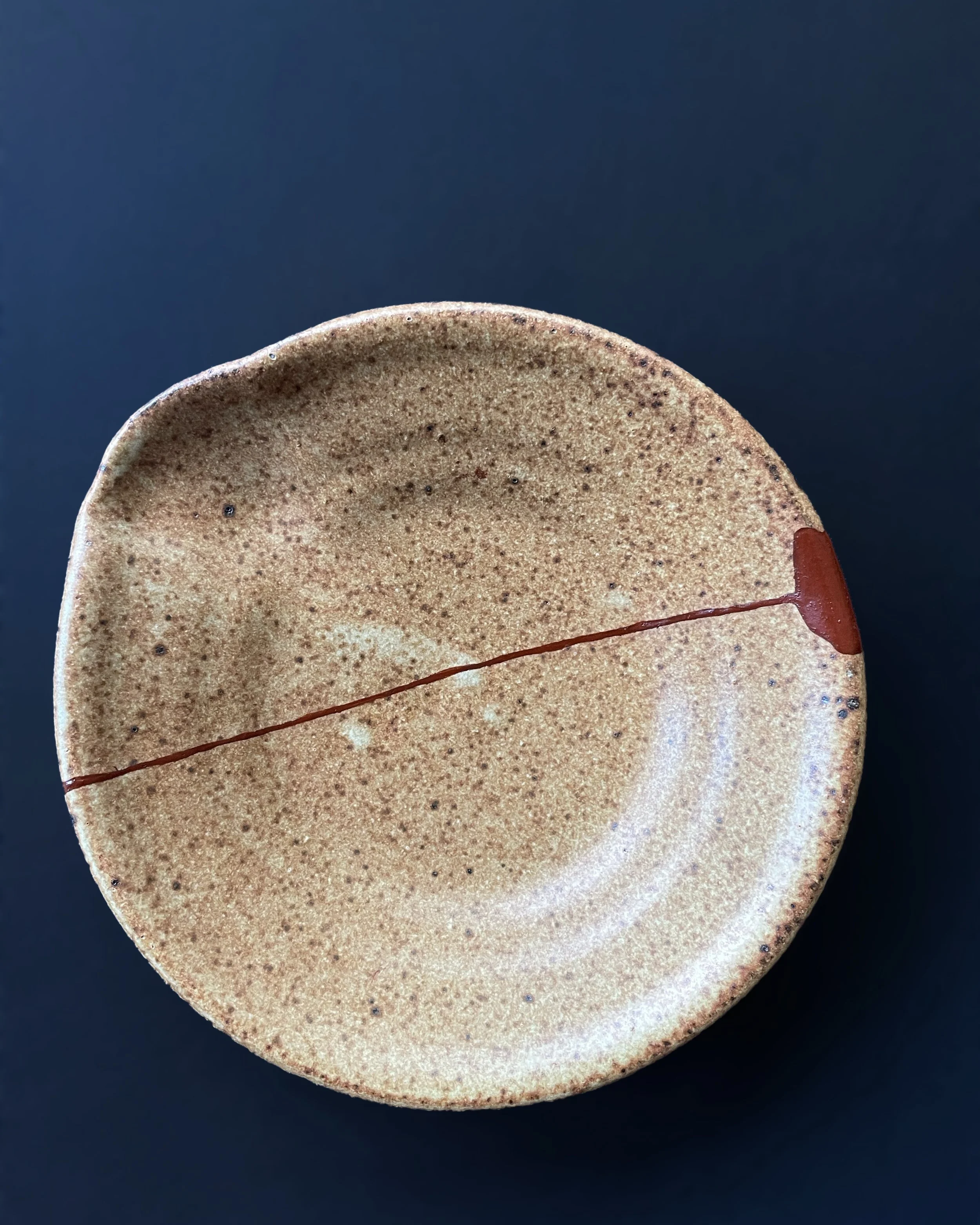
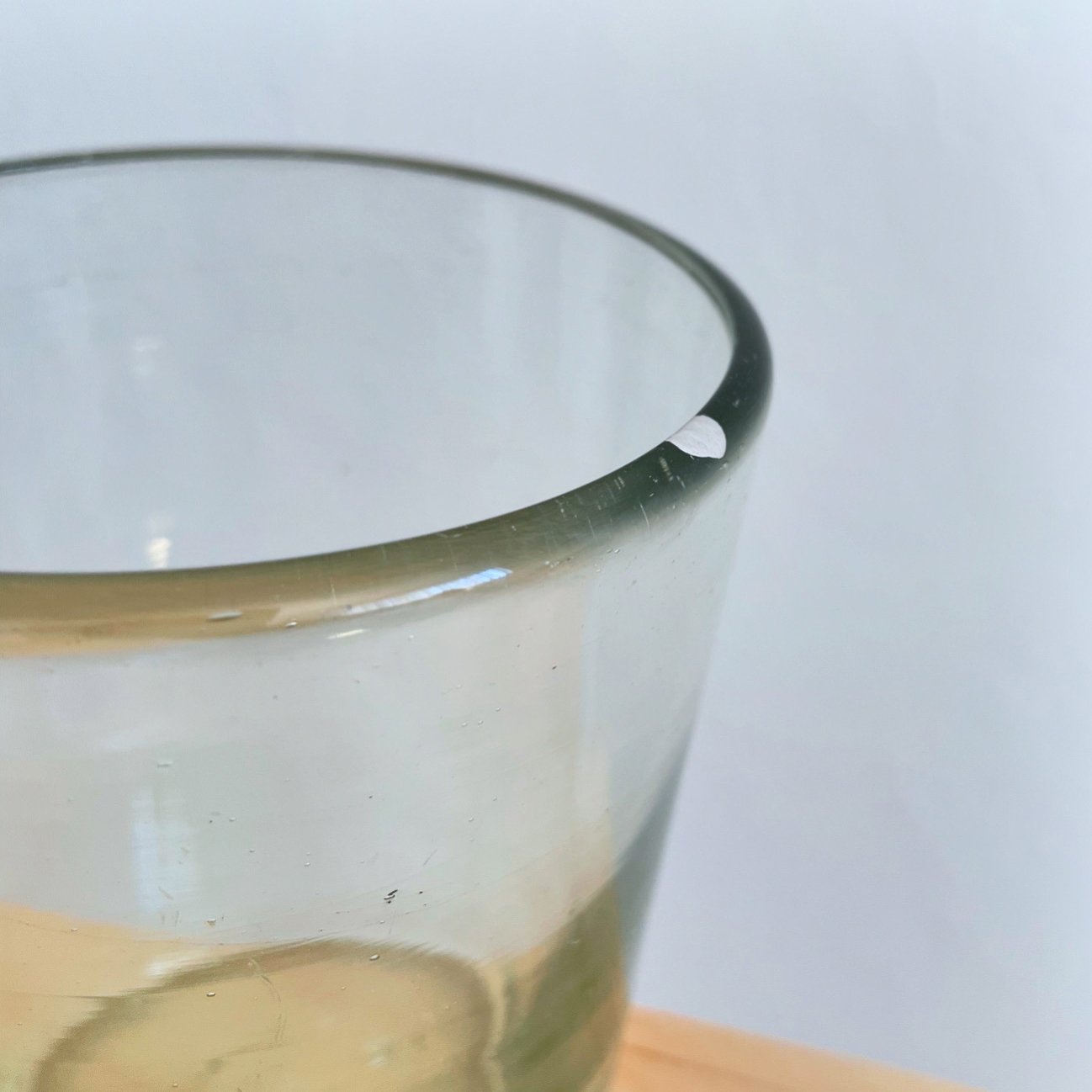
Among some of these traditional crafts utilizing urushi, of which I have fallen in love with and exploring, are kintsugi (金継ぎ) and maki-é (蒔絵). Maki-é utilizes urushi and powdered metal, such as silver, gold, brass and other reflective beauties like shells as means of decoration. Kintsugi is a way, mending objects that has experienced breaks, chips, and cracks using urushi as a primary adhesive, transforming what may be considered flaws to be celebrated.
Urushi requires a lot of patience and a specific environment to cure. When those requirements are met, the strength and beauty is something extraordinary and feels synonymous with our strength and resilience. This quality brings depth to the process, and something that keeps me engaged to further explore urushi’s possibilities.
Sampling of these urushi based works can be viewed by clicking on the icons below: